Showing posts with label Fitness. Show all posts

Adventure Tech: Three New Fitness Watches From Garmin

Posted by Unknown on Monday, January 5, 2015

This week, the annual Consumer Electronics Show will kick-off in Las Vegas, where hundreds of tech companies will show off their latest gadgets and devices. This year, the hottest trend seems to be wearables, with smartwatches, fitness trackers, and a variety of other gear taking center stage. Over the next few days, there will be hundreds of press releases sent out announcing all kinds of interesting and exciting innovations in technology, and not to be left out, Garmin has already announced three new fitness-oriented smart watches as well.

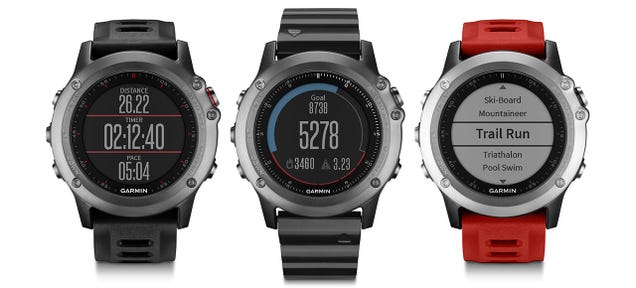
Perhaps the most exciting of these new products is the Fēnix 3, the latest update to one of Garmin's flagship products. The Fēnix has been an outstanding product for outdoor athletes and mountaineers for the past couple of years, but the latest version adds elements that have become common in fitness trackers such as the Fitbit. For instance, the Fēnix 3 now tracks your steps throughout the day, alerts you when it is time to be more active, and estimates the number of calories burned too. It can also track your VO2 max, recovery times post-workout, and can even count the strokes of swimmers too. The new model features faster GPS tracking, an improved display, and the ability to connect with friends to share workout and performance data. Garmin went back to the drawing board with the Fēnix 3 to give it a more refined look as well. As a result, the watch now resembles something you could wear all day long, as opposed to something designed specifically for working out. The Fēnix 3 will have an MSRP that starts at $499, and will begin shipping in the first quarter of 2015.

Garmin has also revealed a new GPS watch called the Epix which features 1.4-inch color touch screen that is capable of displaying maps used for navigation. The device comes with a world-wide base map, and has 8GB of storage to add more detailed maps for specific regions as well. It includes a digital compass, altimeter, barometer, and is water resistant down to 50 meters. It fill start at $549 when it begins shipping this quarter.

Finally, Garmin has also introduced the Vivoactive, a more scaled back an affordable fitness watch, that will meet the needs of those more focused on their workouts, and less on exploring the backcountry. It'll track pace, distance, and duration of your workouts, and comes with a color touch screen and a more subdued design. The Vivoactive will start at $249, and will be available soon as well.

This is just a taste of the new wearable devices that will be shown off at CES this week. Other companies are also rushing to get their latest gadgets out to the public as well, so expect to see a deluge of similar products. The difference is that Garmin has been making fitness and GPS watches for some time, and they bring a solid heritage to these new products as well.
More aboutAdventure Tech: Three New Fitness Watches From Garmin

Gear Closet: Jabra Sport Pulse Wireless Earbuds

Posted by Unknown on Friday, December 26, 2014

Now that Christmas is over, it is time to start looking ahead to the New Year, a time when many people make resolutions to workout more and to get into better shape. Over the past few years, there have been a number of great new wearable technology products that have hit the market that can help us achieve those goals, including numerous activity monitors and smart apps. One of the more innovative of these products is the new Jabra Sport Pulse wireless earbuds, a device that combines a pair of Bluetooth earphones with a built-in heart rate monitor.

If you're a serious outdoor athlete, you have probably worn a heart rate monitor at some point. Traditionally, these somewhat bulky devices are strapped across the chest in order to keep track of your heart rate while on a workout. This can help track performance over time, and give you an indication of how efficient you are as runner, cyclist, or even swimmer. But wearing that chest strap can be uncomfortable and distracting for many athletes, which is why they aren't used as much as they could be.

The Jabra Sport Pulse does away with the bulky chest strap altogether, and puts the heart rate monitor into the headphones themselves. These earbuds are a bit larger than most others you'll find on the market, but once you get them properly fitted (using the included EarGels and EarWings), and have used them a time or two,  you'll soon forget that you are even wearing them at all.

The Sport Pulse earbuds pair wirelessly with a smartphone or Bluetooth enabled mp3 player, allowing the wearer to listen to their favorite music or podcasts while they workout without having an annoying cable running from their ears to their device. This same connection shares heart rate information with the Jabra Sport Life app (available for iPhone and Android), which tracks progress over time, and suggests workouts for improving performance as well. With the app installed on your smartphone, you can check historical data for your workouts, and see how your fitness levels change.


Throughout your workout, the Sport Pulse earbuds will also provide audio feedback to let you know how well you're doing. At ten minute intervals, a voice inside your ear will let you know how far you've run, how fast you're moving, what your current heart rate is, and what "fitness zone" you are operating in. Those zones can include "fat burning," "cardio training," and "intense cardio training" – amongst others – depending on how hard you are working out at any given time. This audio updates make it easier to know how well you are performing on any given workout, and can motivate you to go a bit harder and faster when you feel the need.

As someone who runs nearly every day, it is incredibly liberating to not have to deal with any kind of cable running from my earbuds to my music player. This may seem like an insignificant thing, but if you've ever found that cable to be annoying while you run or ride, you'll understand how nice it can be to do away with it altogether. Throw in the ability to do away with the heart rate monitor strapped to your chest, and you start to see how convenient these headphones truly are. If you routinely run with a heart rate monitor now, you owe it to yourself to try these earbuds out. You may just discover how nice it can be to workout with a single wearable device that can function as your earphones too.

Jabra has included a number of other nice features on the Sport Pulse earbuds as well. The addition of an in-line remote comes in very handy for starting and stopping your music, while another button on the left earbud allows you to begin, end, and pause your workout too. An integrated microphone lets the user take phone calls while wearing the headphones, and it is even possible to interact with Siri on the iPhone (and Google Now on Android) while working out too. While I generally try to run to get away from phone calls and text messages for a little while, it is nice to have the ability to take them if the need arises.

These earbuds have also been built with the outdoor athlete in mind. They are surprisingly durable, and have been designed to resist rain, dust, and the shock that comes with being dropped. Jabra knew that they had to make the Sport Pulse earbuds tough and dependable, and it shows in how well they are constructed.

It is hard not to be impressed with all of the technology that is crammed inside the Sport Pulse headphones, but they do come with a few flaws. For instance, I was less than impressed with the sound quality that they delivered. Jabra has a great reputation for delivering very good sound, but the Sport Pulse sound just "okay." They aren't particularly bad, but there is also nothing to get all that excited about either. I would have liked to have heard a little more punch – for lack of a better word – out of my music, but instead the sound quality left me feeling a bit detached from what I was listening to. That said, the music and vocals sounded clear, there just wasn't anything exciting about it in any way.

Since these are wireless earbuds with a heart rate monitor attached, they also have a built-in rechargeable battery. That battery is good for about four hours of life before it needs to be recharged. That means you'll have to remember to plug in and charge yet another device if you want to use these regularly. For me, I can get about three normal workouts from these earbuds before I need to juice them up again. Optimally, I'd love to see the battery life at least doubled, but considering how small these headphones are there will need to be some significant breakthroughs in battery technology to make that happen anytime soon. For now, you'll have to recharge these headphones often, and keep your standard pair of wired earbuds close by just in case. Fortunately, the Sport Life app provides information about the current level of charge on the batteries, which is a good reminder of when it is time to plug them in.

Jabra sells the Sport Pulse wireless earbuds for $199.95, which sounds a bit expensive if you're just comparing them to other Bluetooth earphones. But when you factor in the built-in heart rate monitor, they actually become quite a bargain. The fact that you can do away with entangling wires running to your audio player, and get rid of the bulky chest strap at the same time, makes this product completely worth the money for many outdoor athletes. If you set your expectations accordingly for the sound quality that these headphones produce, and make it part of your routine to recharge them regularly, you'll find that Jabra has created an excellent product for those who are serious about their fitness.
More aboutGear Closet: Jabra Sport Pulse Wireless Earbuds

Adventure Tech: Introducing the Apple Watch

Posted by Unknown on Wednesday, September 10, 2014

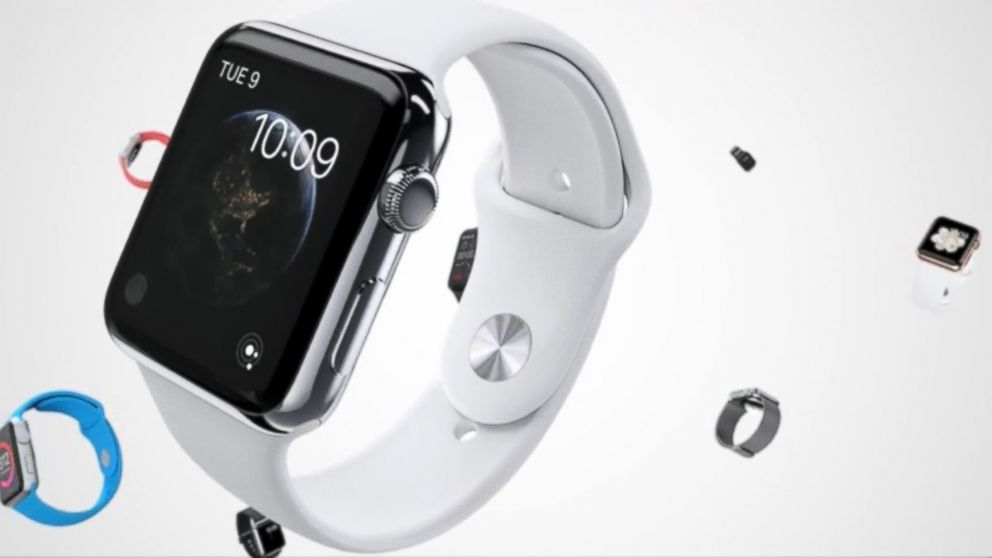
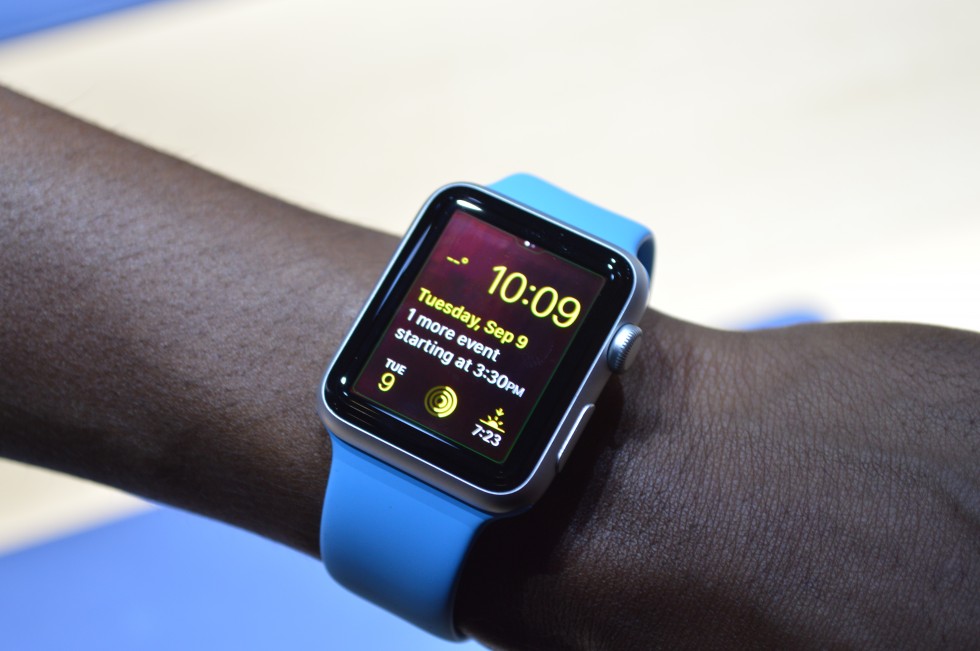
Yesterday was a big day in the world of tech gadgets. Not only did Apple unveil its new iPhone, it also showed off a new payment system that uses NFC technology to purchase things both online, and in brick and mortar stores. But perhaps most importantly of all, the company also took the wraps off a new product called the Apple Watch, which could hold a lot of potential for outdoor athletes.

If you recall, a month ago I mentioned how wearable technology was a hot item at the latest Outdoor Retailer show. A number of the companies that produce fitness watches were on hand, and showing off some innovative new options for athletes. These watches and fitness trackers were thinner, lighter, more comfortable, provided more functionality, and now have the ability to connect to your smartphone to share data. It was clear that there was a concerted focus on creating devices that were easier to use, and offered innovation that had been lacking in previous models.

Apple's watch will be competing directly against those devices in the fitness space, but it also hopes to do so much more that those devices as well. It tethers to an iPhone to provide data, and can pretty much do just about anything you'd expect from a smartphone, but with functionality shrunk down to fit on your wrist. You can use it to control your music for instance. It can display texts, emails, and other alert messages. It will provide walking directions to a destination, and it can display weather updates or give you your schedule for the day. Oh yeah, and it can also tells time.

Of course, most of that stuff already exists in smartwatches available from other companies as well. But Apple has wrapped it all up in an intriguing new operating system that looks easy and fun to use. This will help set their watch apart from its competitors in many ways, as it appears to have Apple's trade mark was of use, allowing anyone to quickly find the functionality that they want, and dial it in for their needs.

But Apple is banking on this device to be more than just a smartwatch, at least as we've come to know them thus far. It is hoping to put the Watch at the center of our workout routines, serving as coach, motivator, and activity tracker. With the launch of iOS 8, the operating system that runs the iPhone and iPad, Apple has introduced a new product called HealthKit. This set of system API's allows app creators to track and store fitness data in a central location, allowing us to chart our progress over time. It will also allow us set goals, and keep track of everything we do throughout the day, whether thats running five miles, riding the bike for an hour, or simply strolling around the block. HealthKit is at the center of a big push to create a healthy lifestyle, and the Apple Watch will have a major role in that as well. 

Apple has packed a lot of technology into the Watch, including a number of sensors for tracking movement, speed, and calories burned. It also has a built-in heart rate monitor that can accurately track just how hard you are working at any given time. This does away with the bulky chest straps that we've all used in the past, which is reason enough to be interested in the device alone. Those sensors are said to be highly sensitive, allowing the device to know when you're working hard, and when you're slacking off.  

But Apple says those sensors will be active at all times, tracking what you do not only during your workout, but also throughout the rest of the day too. If you elect to climb the stairs, rather than take the elevator, the watch will know it, and add the extra exercise to your records. Over time, it will learn about your routine, and help set new goals designed to help you improve performance. In a sense, it will become a virtual coach, giving you incentives to strive to improve. Apple has big plans for HealthKit, and this is probably where the Watch is most likely to appeal to outdoor athletes. Additionally, the HealthKit system is open to all app developers to use, which means we'll probably see apps like Strava and Map My Ride integrating into it as well. This holds a lot of promise for helping us improve how we run, bike, climb, or do just about any of our other favorite activities. Just don't plan on taking it swimming, as the Apple Watch is water resistant, not water proof.

There are a lot of unknowns about the Apple Watch at the moment, and hopefully those things will be made clear prior to launch. For instance, battery life remains a big concern with Apple CEO Tim Cook mentioning multiple times throughout the keynote how the Watch would be able to function "all day." That doesn't bode well for those of us who aren't use to charging a watch on a daily basis the way we do a cell phone. My Suunto Ambit can usually go ten days or more between charges, even with daily runs using GPS. That said, even that took me some time to get use to. While we don't know just yet what to exactly expect out of the Apple Watch's battery, I'd be willing to venture a guess that this thing will be charging alongside your iPhone every night. 

Exact pricing remains a mystery as well. We know that it will "start at" $349, but that will no doubt be fore the base model. A Sports Edition will be offered as well, which will include a specially designed band for working out, and the watch itself will be a bit more ruggedized as well. Apple hasn't said what the price of that version will be, and it likely won't be revealed until we get closer to the release date, currently set for "early 2015."

It is important to keep in mind that the Apple Watch will offer a lot of functionality specifically designed for fitness, but it is a lifestyle gadget that will go well beyond that as well. The fact that it can do so many things, while also being at the center of your workouts, is very intriguing. This could be the watch you wear all day, and not just the one you use when you go for a run. With that in mind, the designers at Apple have even cleverly constructed a wide variety of bands that can be quickly, and easily switched out, giving the watch a unique look with each one. That extends the versatility of the watch even further, as you can snap on the sports band for a run, then switch to a more casual band for a night out on the town. All the while, the Apple Watch continues to track your movements, provide status updates, and remind you to pick up milk on the way home. 

As I said, the potential for the Apple Watch is off the charts. Now, we'll have to wait to see if it delivers. 
More aboutAdventure Tech: Introducing the Apple Watch

Adventure Tech: Jabra Announces Bluetooth Earbuds with Built-In Heart Rate Monitor

Posted by Unknown on Thursday, August 28, 2014

In one of my post-Outdoor Retailer articles I mentioned that wearable technology was a popular item at the show this year, with a number of great looking fitness, running, and mountaineering watches in the works. At the end of that article, I even hinted that there was a product coming that would put a heart rate monitor in your earbuds, freeing us from the cumbersome and uncomfortable strap forever. When I wrote that, I wasn't able to share who was making the product, or when it was coming. But yesterday, Jabra took the wraps off of this gadget, announcing pricing and availability for their new Sports Pulse Wireless earbuds.

These new earphones are obviously designed with the runner in mind. Lightweight, durable, and built to take on your daily workouts, they offer excellent sound quality with wireless Bluetooth connectivity to your smartphone or mp3 player. Encased in carbon fiber, the Sport Pulse Wireless are sweat- and rain-proof, while remaining comfortable to wear, even on extended runs.

But what really sets these earbuds apart are the integrated heart rate monitor. Wearing these will allow runners to leave the bulky strap monitor and home, in favor of this incredibly lightweight solution. When paired with Jabra's app the provide feedback on performance throughout your run, and record improvements over time. They'll even allow you to set goals based on distance run, calories burned, and time out on the trail or road.

Having seen these earbuds in person, I can attest to how small they are, while providing good sound quality for your run. Additionally, I happen to love using Bluetooth earbuds, as they eliminate the wire running to your music player during a workout. Finding a pair that can stream music wireless, and serve as a heart rate monitor is simply incredible. Jabra says the Sports Pulse Wireless are good for five hours of battery life, which is an improvement on previous generations, even though they are smaller in size. That means that most of us can get a couple of workouts in before we need to recharge, while marathoners can be sure that they'll make it through a long run without worry.

The Sports Pulse Wireless will be available to purchase in late September, with MSRP of $199. That's a bit pricey, but if they deliver on their promise, they'll be worth it. Check out the video below for more.


More aboutAdventure Tech: Jabra Announces Bluetooth Earbuds with Built-In Heart Rate Monitor